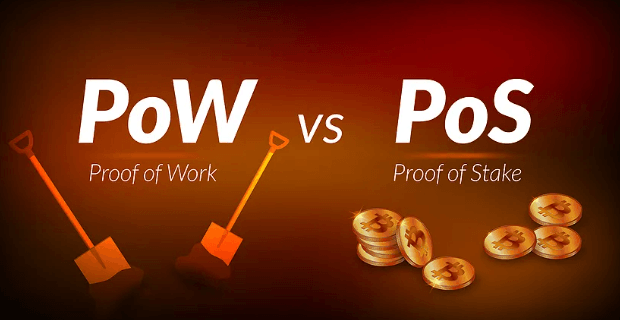
Proof of Work and Proof of Stake are two core blockchain consensus approaches. The piece compares mechanisms, security assumptions, and incentive structures side by side. It examines energy use, validator economics, and governance implications with clinical precision. The discussion highlights practical tradeoffs in speed, decentralization, and resilience. A clear framework is offered to assess which system aligns with specific goals, while real-world implications prompt further scrutiny and deeper consideration.
What PoW and PoS Are, Side by Side
Proof of Work (PoW) and Proof of Stake (PoS) are two distinct consensus mechanisms used to secure blockchain networks and validate transactions. PoW relies on computational effort, while PoS uses stake as a securing parameter. The comparison highlights PoW drawbacks and PoS benefits, clarifying operational differences, incentive structures, energy implications, and validator dynamics in a concise, precise, and freedom-oriented technical overview.
How Security Works in PoW vs PoS
Security in PoW and PoS hinges on distinct defense mechanisms that deter attacks and preserve ledger integrity.
The security model comparison centers on incentive alignment: PoW relies on energy expended by miners to deter fraud, while PoS leverages stake-based penalties and validator incentives to punish misbehavior.
Both frameworks guard consistency, though attack vectors and cost structures diverge, shaping systemic resilience and trust.
Practical Tradeoffs: Energy, Speed, and Governance
Practical tradeoffs in distributed consensus frameworks center on how energy expenditure, transaction throughput, and governance mechanisms shape real-world viability. The analysis emphasizes energy consumption as a fundamental cost driver and highlights throughput limits that constrain network responsiveness. Governance structures influence resilience and update cycles, while validator decentralization affects trustlessness and fault tolerance, balancing security against performance in both PoW and PoS regimes.
Which Network Fits Your Needs? A Quick Decision Framework
Selecting the appropriate consensus framework depends on aligning network priorities with operational requirements. The framework contrasts PoW and PoS by objective: security posture, scalability, and governance velocity.
For users seeking freedom, priority is predictable dispute resolution pathways and transparent token distribution. Decision criteria: throughput needs, finality guarantees, validator participation, and resiliency against collusion, then align with preferred risk tolerance and ecosystem maturity.
See also: The Future of Connectivity in a Wireless World
Conclusion
Proof of Work and Proof of Stake each secure networks through distinct economic incentives. In PoW, security scales with hardware investment and energy expended, while PoS relies on stake and penalties for misbehavior. An eye-catching statistic: Ethereum’s transition to PoS reduced annual energy use by over 99%. Practically, PoW favors robust, energy-intensive competition; PoS emphasizes lower costs and faster finality. Users should consider governance needs, throughput, and energy considerations when choosing between mechanisms.